A blood pressure check takes only a few minutes, yet the numbers it produces can reveal important information about your heart and blood vessels. High blood pressure often develops without obvious symptoms, which means a person may feel perfectly well while the condition gradually places extra strain on the body. Regular measurement is therefore an important part of preventive healthcare.
What Do the Two Numbers Mean?
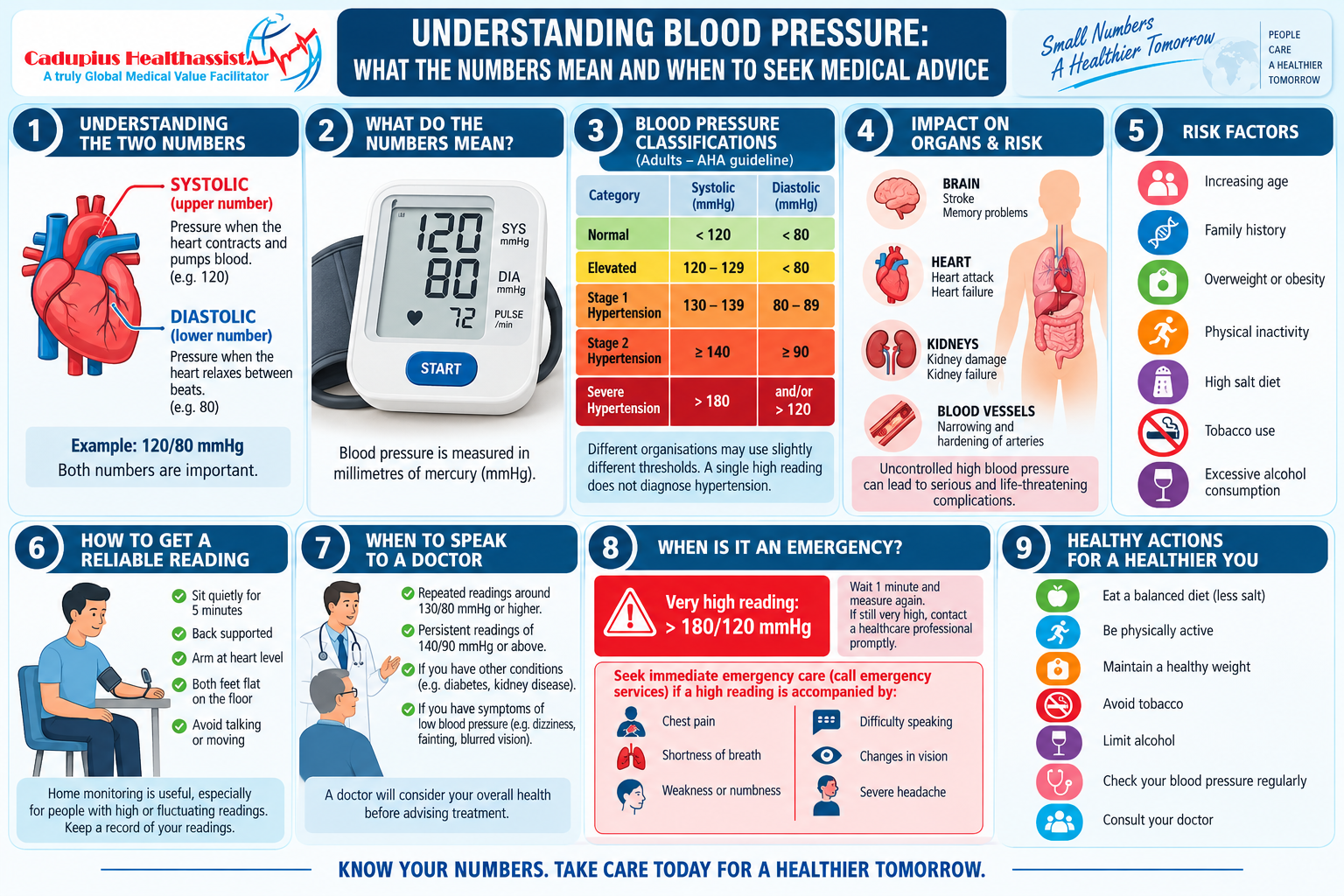
Blood pressure is expressed in millimetres of mercury (mmHg) and is written as two numbers, for example, 120/80 mmHg.
The upper number is systolic blood pressure. It measures the pressure inside the arteries when the heart contracts and pumps blood.
The lower number is diastolic blood pressure. It measures the pressure in the arteries while the heart relaxes between beats.
Both numbers are important. A higher-than-normal reading in either one may require attention, particularly when it is repeatedly observed.
What Is Considered Normal Blood Pressure?
According to the American Heart Association (AHA), adult blood pressure readings are generally classified as:
| CATEGORY | SYSTOLIC | DIASTOLIC |
|---|---|---|
| Normal | Less than 120 | and less than 80 |
| Elevated | 120–129 | and less than 80 |
| Stage 1 Hypertension | 130–139 | or 80–89 |
| Stage 2 Hypertension | 140 or higher | or 90 or higher |
| Severe Hypertension | Higher than 180 | and/or higher than 120 |
Different health organisations use somewhat different thresholds for formally diagnosing hypertension. The World Health Organization (WHO), for example, defines hypertension as systolic blood pressure of 140 mmHg or higher and/or diastolic pressure of 90 mmHg or higher when elevated readings are confirmed on two different days.
This is one reason a single unusual reading should not normally be used to diagnose hypertension. Blood pressure can temporarily change because of physical activity, anxiety, pain, caffeine, certain medicines or even the circumstances in which it is measured.
Why High Blood Pressure Matters
When blood pressure remains high over time, the heart and blood vessels have to work under increased pressure. Untreated hypertension can contribute to serious conditions including heart disease, stroke and kidney disease.
One of the difficulties with hypertension is that it usually produces no noticeable symptoms. Waiting for headaches, dizziness or other warning signs before checking blood pressure can therefore give a false sense of security. Measuring it is the only reliable way to know whether it is elevated.
Risk tends to increase with factors such as advancing age, family history, excess body weight, physical inactivity, diets high in salt, tobacco use and excessive alcohol consumption.
Getting a More Reliable Reading
Correct measurement matters. Before checking your blood pressure, sit quietly for a few minutes. Your back should be supported, both feet should rest flat on the floor, and the arm being measured should be supported approximately at heart level. Avoid talking or moving while the reading is being taken.
Home monitoring can be particularly useful for people who have already been diagnosed with hypertension or whose readings fluctuate. Keeping a record of readings also allows a healthcare professional to look at the overall pattern instead of relying on one isolated measurement.
When Should You Speak to a Doctor?
Consider discussing your blood pressure with a healthcare professional if readings are repeatedly above your normal range, particularly if they remain around 130/80 mmHg or higher. Persistent readings of 140/90 mmHg or above warrant medical assessment rather than being ignored.
A doctor may consider several factors—including age, cardiovascular risk, kidney disease, diabetes, medications and other medical conditions—before deciding whether lifestyle changes alone are appropriate or medication is required.
Low blood pressure also deserves attention when it causes symptoms. A reading below 90/60 mmHg is commonly described as hypotension. Some healthy people naturally have relatively low blood pressure, but repeated dizziness, fainting, blurred vision, unusual weakness, nausea or confusion should be discussed with a healthcare professional.
When Is High Blood Pressure an Emergency?
A very high reading requires particular attention.
If blood pressure is higher than 180/120 mmHg, wait at least one minute and measure it again. If the second reading remains extremely high but there are no new concerning symptoms, contact a healthcare professional promptly for advice.
However, a reading above 180/120 mmHg accompanied by symptoms such as chest pain, shortness of breath, weakness or numbness, difficulty speaking, changes in vision or severe concerning symptoms may indicate a hypertensive emergency and requires immediate emergency medical care.
Small Numbers, Important Message
Blood pressure naturally varies throughout the day, so one reading does not tell the whole story. What matters most is the pattern over time.
Knowing your numbers, having them checked regularly and responding to persistent changes can help identify hypertension before complications develop. Combined with a balanced diet, appropriate physical activity, healthy weight, avoidance of tobacco and prescribed treatment when necessary, good blood pressure management can make an important contribution to long-term cardiovascular health.
Medical Disclaimer: This article is intended for general health education and should not be used as a substitute for diagnosis, treatment or personalised advice from a qualified healthcare professional.