
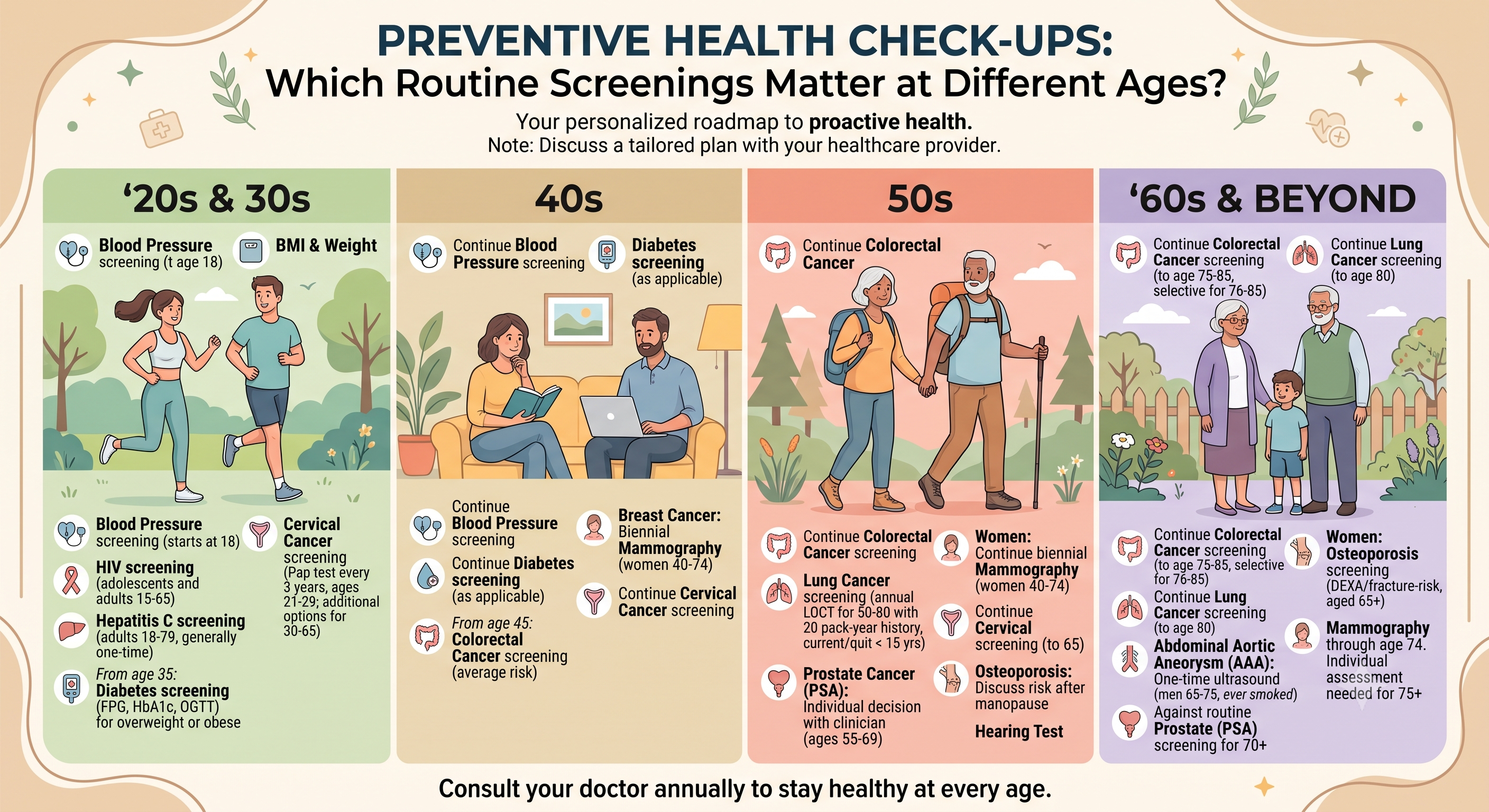
Most people think about healthcare when they develop a symptom. Preventive healthcare works differently. Its purpose is to identify certain health risks before they begin causing noticeable problems and to provide an opportunity for appropriate medical advice, monitoring or treatment at an earlier stage.
But preventive health screening should not mean undergoing every available blood test, scan or investigation once a year.
The right screening depends on a person's age, sex, family history, body weight, smoking history, previous health conditions and earlier test results. A screening test that is important at 55 may have little relevance for a healthy person at 25.
Here is a practical age-wise overview, based primarily on recommendations from the U.S. Preventive Services Task Force (USPSTF).
In Your 20s: Establish Your Health Baseline
Your 20s are an important time to understand your basic health status and identify risk factors that could become more significant later.
For Men
Blood pressure screening should begin in adulthood. The USPSTF recommends screening adults aged 18 years and above who do not already have diagnosed hypertension. [1]
A high blood-pressure reading does not automatically establish a diagnosis. Where hypertension is suspected, measurements taken outside the clinical setting may be used to confirm it before treatment is started.
Two other screenings can also be relevant to younger adults.
HIV screening is recommended for adolescents and adults aged 15–65, with additional testing considerations for people outside this age range who have increased risk. [10]
The USPSTF also recommends hepatitis C screening for adults aged 18–79. For most adults, this can be a one-time screening, while people with continuing risk factors may require repeat testing. [11]
For Women
Women have the same considerations for blood pressure, HIV and hepatitis C screening. [1][10][11]
An additional important preventive measure is cervical cancer screening.
Under the current final USPSTF guideline, women aged 21–29 should undergo cervical cytology, commonly known as a Pap test, every three years. [2]
For healthy young adults, the emphasis should therefore be on appropriate evidence-based screening rather than automatically choosing an extensive package containing numerous laboratory investigations.
In Your 30s: Pay Greater Attention to Metabolic Health
During the 30s, lifestyle and metabolic risk factors can become increasingly relevant. Weight gain, reduced physical activity and family history can influence the likelihood of developing diabetes and cardiovascular problems.
For Men
Blood pressure screening should continue. [1]
From age 35, the USPSTF recommends screening adults who have overweight or obesity for prediabetes and type 2 diabetes. [3]
Screening can be carried out using tests such as:
- Fasting plasma glucose
- HbA1c
- Oral glucose tolerance testing
These tests assess blood-glucose regulation in different ways. The appropriate test should be selected by the treating healthcare professional.
Men should also remain within the recommended age ranges for HIV and hepatitis C screening where applicable. [10][11]
For Women
Women have the same blood-pressure and diabetes-screening considerations. [1][3]
Certain factors may increase the importance of metabolic assessment. For example, the USPSTF identifies a history of gestational diabetes and polycystic ovarian syndrome (PCOS) among factors associated with increased diabetes risk.
Cervical cancer screening should also continue. For women aged 30–65, the current final USPSTF recommendation provides several acceptable approaches, including cervical cytology, high-risk HPV testing or cotesting at specified intervals. [2]
Which method is appropriate should be discussed with a healthcare professional.
In Your 40s: Cancer Screening Becomes Increasingly Important
The 40s represent an important transition because several recognised cancer-screening programmes begin during this decade.
For Men
Continue appropriate blood-pressure screening and diabetes screening where the eligibility criteria apply. [1][3]
From age 45, average-risk adults should begin colorectal cancer screening. [4]
There is no single screening method suitable for everyone. Depending on the programme and clinical advice, options may include stool-based tests or direct visualisation procedures such as colonoscopy.
People with certain personal or family histories may not fall into the average-risk category and may require a different screening approach.
For Women
Women have the same recommendation for colorectal cancer screening beginning at age 45 when they are at average risk. [4]
An additional major screening consideration during this decade is breast cancer.
The USPSTF recommends screening mammography every two years for women aged 40–74. [5]
Women should also continue cervical cancer screening according to the appropriate method and interval. [2]
Therefore, by the 40s, preventive healthcare often moves beyond general health measurements to include more structured age-based cancer screening.
In Your 50s: Strengthen Early Detection
Preventive screening becomes particularly important in the 50s, but individual risk remains essential when deciding which investigations should be performed.
For Men
Colorectal cancer screening should continue. [4]
Another discussion that may become relevant is prostate cancer screening.
For men aged 55–69, the USPSTF does not recommend automatically screening every man with a PSA test. Instead, the decision about PSA-based prostate cancer screening should be an individual one after discussing the potential benefits and harms with a clinician. [6]
This distinction is important because screening can sometimes lead to false-positive findings, additional investigations and detection of cancers that may never have caused significant health problems.
For Women
Women should continue biennial mammography as recommended through age 74. [5]
Colorectal cancer screening should also continue, while cervical screening remains relevant through age 65 depending on previous results and individual circumstances. [2][4]
Women who have gone through menopause may also begin discussing osteoporosis risk, especially when other risk factors for fracture are present. [9]
For Both Men and Women
One screening that requires particular attention to eligibility is lung cancer screening.
It is not a routine CT scan for everyone over 50.
The USPSTF recommends annual low-dose computed tomography (LDCT) for adults aged 50–80 who have at least a 20 pack-year smoking history and currently smoke or stopped smoking within the past 15 years. [7]
Screening is discontinued once a person has not smoked for 15 years or develops a health problem that substantially limits the potential benefit of screening.
In Your 60s and Beyond: Protect Long-Term Health and Independence
As people get older, preventive healthcare becomes increasingly individualised. Previous screening results, overall health and the likely benefit of detecting a condition all become important.
For Men
Men aged 65–75 who have ever smoked should undergo one-time abdominal ultrasonography to screen for abdominal aortic aneurysm (AAA). [8]
For men aged 65–75 who have never smoked, the decision is more selective rather than a universal recommendation.
For prostate cancer, the USPSTF recommends against routine PSA-based screening in men aged 70 and above. [6]
Colorectal cancer screening is routinely recommended through age 75. For people aged 76–85, the decision becomes selective and should consider overall health, previous screening history and personal preferences. [4]
For Women
Bone health becomes especially important.
The USPSTF recommends osteoporosis screening for women aged 65 and above to help identify people at increased risk of osteoporotic fractures. [9]
Screening commonly involves DXA bone-density measurement, sometimes combined with clinical fracture-risk assessment.
Postmenopausal women younger than 65 may also qualify for osteoporosis screening when they have one or more recognised risk factors and clinical assessment indicates increased fracture risk. [9]
Current USPSTF guidance recommends mammography through age 74. For women aged 75 and above, the USPSTF currently considers the available evidence insufficient to determine the balance of benefits and harms of routine mammography, making individual clinical assessment particularly important. [5]
Men and Women Do Not Always Need the Same Tests
Preventive healthcare overlaps substantially between men and women, but some important differences remain.
Screenings commonly relevant to both include:
- Blood-pressure screening
- Prediabetes and diabetes screening when eligibility criteria are met
- Colorectal cancer screening
- Lung cancer screening for eligible people with significant smoking history
- HIV screening
- Hepatitis C screening
Important screening considerations specifically affecting women include:
- Cervical cancer screening
- Mammography for breast cancer
- Osteoporosis screening, particularly from age 65
Important screening considerations specifically affecting men include:
- Individualised PSA-based prostate cancer screening during the appropriate age range
- AAA screening, particularly for men aged 65–75 who have ever smoked
This is why selecting a health package purely according to age, without considering sex and individual risk factors, may not provide the most appropriate preventive evaluation.
Why More Tests Are Not Always Better
A very large preventive package may appear more comprehensive, but more testing does not automatically mean better preventive healthcare.
Some tests are useful only for particular age groups or risk categories. Unnecessary investigations can sometimes produce incidental or false-positive findings, leading to further investigations that may not ultimately provide a health benefit.
The better approach is to begin with age, sex, medical history and recognised risk factors, and then determine which investigations are appropriate.
How Cadupius Healthassist Can Help
For individuals considering preventive health evaluation in India, Cadupius Healthassist can help coordinate personalised preventive health check-up packages in coordination with renowned hospitals.
The coordination can take into consideration factors such as age, sex and the type of preventive health evaluation being sought, enabling patients to explore suitable preventive-check-up options available through established hospitals.
The participating hospital and its qualified medical professionals remain responsible for determining which tests, investigations or specialist consultations are clinically appropriate for the individual.
Cadupius Healthassist's role is healthcare facilitation and coordination. It does not diagnose medical conditions, prescribe medicines or treatment, or substitute for consultation with a qualified healthcare professional.
Medical References and Guideline Sources
[1] Hypertension in Adults: Screening
U.S. Preventive Services Task Force (USPSTF), April 27, 2021.
Relevant guidance: Screening adults aged 18 years and above without known hypertension.
[2] Cervical Cancer: Screening
USPSTF, Final Recommendation, August 21, 2018.
Relevant guidance: Women 21–29 — cytology every three years; women 30–65 — recommended cytology and/or HPV-based screening options at specified intervals.
[3] Prediabetes and Type 2 Diabetes: Screening
USPSTF, August 24, 2021.
Relevant guidance: Screening adults aged 35–70 with overweight or obesity; tests include fasting plasma glucose, HbA1c and oral glucose tolerance testing.
[4] Colorectal Cancer: Screening
USPSTF, May 18, 2021.
Relevant guidance: Screening adults aged 45–75; selective screening for adults aged 76–85.
[5] Breast Cancer: Screening
USPSTF, April 30, 2024.
Relevant guidance: Biennial mammography for women aged 40–74.
[6] Prostate Cancer: Screening
USPSTF, May 8, 2018.
Relevant guidance: Men 55–69 — individual decision regarding PSA screening; routine PSA screening not recommended for men 70 and above.
[7] Lung Cancer: Screening
USPSTF, March 9, 2021.
Relevant guidance: Annual LDCT for eligible adults aged 50–80 with at least a 20 pack-year smoking history who currently smoke or quit within the previous 15 years.
[8] Abdominal Aortic Aneurysm: Screening
USPSTF, December 10, 2019.
Relevant guidance: One-time ultrasound screening for men aged 65–75 who have ever smoked.
[9] Osteoporosis to Prevent Fractures: Screening
USPSTF, January 14, 2025.
Relevant guidance: Women aged 65 and above, and younger postmenopausal women at increased risk.
[10] Human Immunodeficiency Virus (HIV) Infection: Screening
USPSTF, June 11, 2019.
Relevant guidance: HIV screening for adolescents and adults aged 15–65, with risk-based screening outside this age range.
[11] Hepatitis C Virus Infection in Adolescents and Adults: Screening
USPSTF, March 2, 2020.
Relevant guidance: HCV screening for adults aged 18–79; generally one-time screening for most adults, with periodic screening considered for people with continuing risk.
Important Note
This article is intended for general health information and awareness and should not be interpreted as an individual medical recommendation. Screening guidelines may differ between countries and can change as new medical evidence becomes available. The appropriate screening plan for an individual should be determined by a qualified healthcare professional after considering personal and family medical history, existing conditions and other relevant risk factors.